The Mental Health Continuum
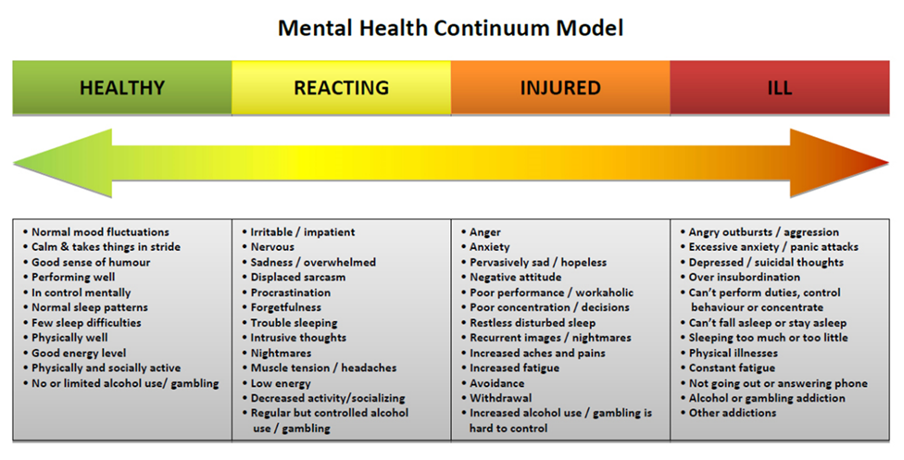
Mental health exists on a spectrum, much like our physical health. Everyone has mental health, and it’s important to remember it isn’t only relevant when things go wrong or when a diagnosis is given. While conversations about mental health often focus on mental illness—like discussing the statistics and symptoms of depression—there’s a whole spectrum to consider, from times of wellness right up to times of illness.
The Mental Health Continuum diagram is a visual tool that helps us understand the range of mental health experiences, showing stages from ‘well’ (mentally healthy and thriving), through ‘reacting’ (early signs of stress or change), to ‘injured’ and ‘ill’ (where symptoms become persistent or diagnosable). It reminds us that mental health is dynamic, and we may move between these stages over time.
The ‘reacting’ stage refers to those times when you start to notice changes in your mood, sleep, stress levels, or general wellbeing—before it becomes a diagnosable mental health condition. For example, you might feel more irritable, have trouble sleeping, or find it harder to switch off from work. This stage is common and a natural response to life’s pressures.
Being aware of your mental health each day is key. Just as we look after our physical health with exercise and nutrition, regular habits can help keep us mentally well. Some practical strategies include:
Engaging in regular exercise—like walking, swimming, or yoga—to boost mood and reduce stress
Practising mindfulness or meditation to stay grounded and manage anxiety
Keeping a journal to process thoughts and track your feelings
Staying connected with friends, family, or community groups to foster a sense of belonging
Setting healthy boundaries between work and personal time
Ensuring you get enough restful sleep and eat balanced meals
If you notice you’re in the ‘reacting’ stage, it’s a good time to act before things escalate. You might:
· Take short breaks throughout the day to recharge
· Talk with a trusted friend or colleague about what’s on your mind
· Adjust your workload or delegate tasks where possible
· Consider seeking extra support through counselling—even if you don’t have a diagnosis, counselling can be a valuable preventative tool
Remember, it’s natural to move up and down the mental health spectrum. Most of us can use our own coping skills and supports to return to feeling well. If you feel stuck or find that your usual strategies aren’t enough, reaching out for professional help is a sign of strength, not weakness. The earlier you seek support, the sooner you can return to feeling your best. Together, we can foster a compassionate community where mental wellbeing is valued and supported every day.

Comments